Fidget Spinners
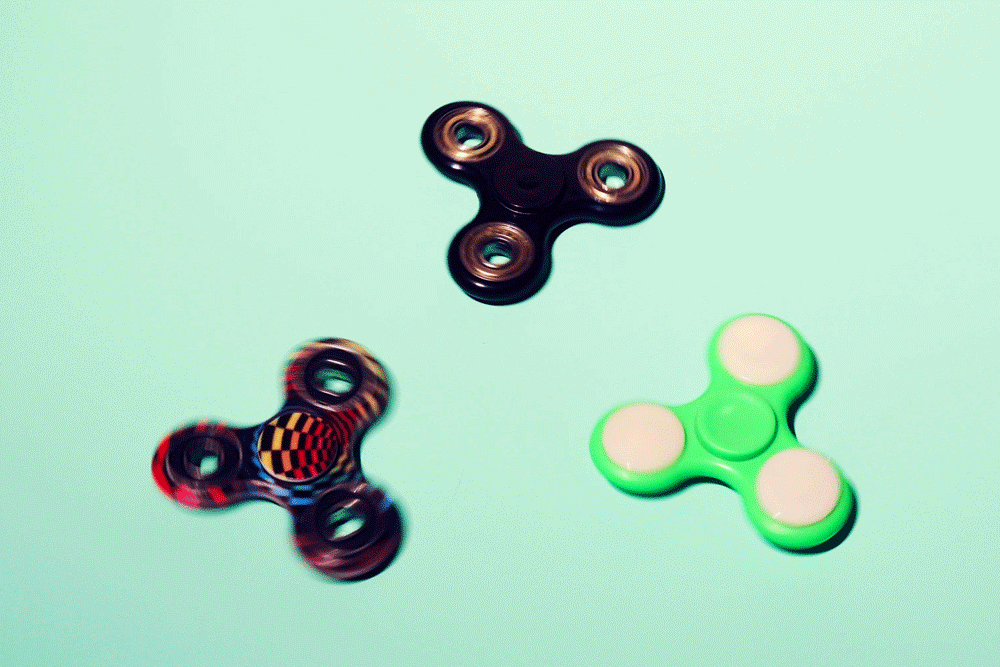
Hatchimals, Shopkins, Loom Bands, Furby, Pogs, Tamagotchi—who remembers these?! Yes, these are some ‘must have’ toys from the last 10 years or so. The current latest craze is Fidget Spinners—they are everywhere now, and I mean everywhere! But the fidget spinner is a little different to the likes of Furby and Loom Bands, in that it wasn’t designed as a toy.
Although dubbed the latest phenomenon, Fidget Spinners have been around for quite some time. Originally patented in the late 1980s, it was designed as a device for distracting and soothing, mainly targeted at autistic children. Then in 2016, they made their debut in the workplace, being described on social media as the ‘best office stress-buster ever’.
This year, their leap to the playground has seen them skyrocket in popularity. If you have primary school children, chances are, you’ve caved in to the Fidget Spinner requests, but are they just part of another soon-to-pass craze that we don’t need to worry about?
From my experience as a teacher, I’ve seen many children tap their fingers on desks, rock on their chairs, or simply needing to shuffle around in some way. Having worked with children with ADHD and autism, I’ve used a range of fidget toys to help keep concentration. But these didn’t have moving parts like the current favourite!
This difference is important as the Fidget Spinner requires hand-eye coordination and can be used in a variety of ways. The moving-parts aspect is what makes them more engaging with use, unlike the more traditional fidget toys which are primarily tactile. The risk? The spinner could become the problem rather than the solution, as it draws the child’s eye away from the parent or teacher.
As a parent, you probably have a few questions. Should you buy one? Should you let your child take them to school? Are they safe? Here I’ve weighed up the pros and cons.
Pros
- Focus.
They will help children diagnosed with ADD and ADHD to focus better in classrooms. While there isn’t a lot of research out there to back up this claim, there are many parents who agree that these gadgets have helped their fidgety child to focus. - Entertainment without electronics.
These little gadgets may encourage your children to put down their tablets and phones and go outside for a while, perhaps even trying a few ‘tricks’ with their spinner. Now that’s got to be a good thing! - Increase imagination.
Working on tricks using multiple spinners with various colours, encourages children use their imaginations and exercise the creative side of their brains.
Cons
- School ban
Most schools view Fidget Spinners as a toy rather than a therapeutic device. It makes sense—multiple toys in a classroom is potentially disruptive. - Potentially harmful.
There have been reports of some spinners flying out of a child’s hand and hitting other children. Whoops! - ‘Dodgy’ products on the market.
Make sure you buy your fidget spinner from a reputable source as there are plenty of people jumping on the money-making bandwagon and selling poor quality products.
I ask myself—if I were teaching today, would I want them in my classroom? I can appreciate that if every child had access to one, the potential for distraction would be immense, but with a little cooperation a good teacher should be able to manage this Fidget Spinner craze with a positive ‘spin’!
If you have concerns about your child’s concentration, try speaking to the teacher—a fidget spinner should not be the solution.
As with everything, the real issue becomes about how and when a toy is used and with a little common sense these little gadgets can be very useful and fun! In the back of the car on the drive to grandma’s… waiting to see the dentist…